Mars Inc.

via Wikipedia: Mars Inc. · see source
Mars, Incorporated (doing business as Mars Inc.) is an American multinational manufacturer of confectionery, pet food, and other food products and a provider of animal care services. It is known for producing iconic confectionery items such as Mars bars, M&M's, Snickers, and Skittles, as well as pet foods like Pedigree and Whiskas.
- founder
- Franklin Clarence Mars
- headquarters
- McLean, Virginia, United States
- industry
- Confectionery, pet food, other food products, animal care services
- annual_sales_2022
- US$45 billion
- ownership
- Privately held by the Mars family
- known_for
- Mars bars, M&M's, Snickers, Skittles, Pedigree, Whiskas
Verified Timeline
Lore & Background
Franklin Clarence Mars sold candy by age 19. The venture initially struggled, but by 1920, Mars returned to Minnesota, founding the Mar-O-Bar Co. in Minneapolis, later incorporated as Mars, Incorporated. In 1923, his son Forrest Mars Sr. suggested basing a candy bar on a chocolate malted milk milkshake, leading to the Milky Way bar, which became the best-selling candy bar. Mars moved its headquarters to McLean, Virginia, in 1984. Wrigley Jr. Company for $23 billion.
Reader's Guide
Its confectionery brands—such as M&M's, Snickers, and Milky Way—have become globally recognized, while its pet food division, including Pedigree and Whiskas, dominates the market. The company's history reflects a family-owned enterprise that expanded through innovation, such as the Milky Way bar, and strategic acquisitions, including Wrigley and Kind North America. The company's Five Principles guide its operations, emphasizing performance and sustainability.
Did You Know?
- The Milky Way bar was inspired by a chocolate malted milk milkshake and became the best-selling candy bar.
Origins & the Birth of Iconic Bars
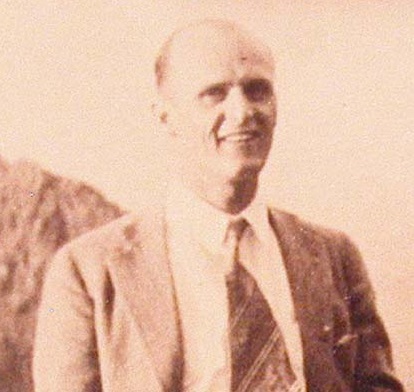
Franklin Clarence Mars learned to hand-dip candy from his mother and was selling confections on the street by his nineteenth year. On June 23, 1911, he and his second wife, Ethel V. Mars, opened the Mars Candy Factory in Tacoma, Washington, producing fresh candy for wholesale. The venture collapsed, however, because the more established Brown & Haley already dominated the local market. By 1920, Mars had returned to his home state of Minnesota, where he founded Mar-O-Bar Co. in Minneapolis—the earliest form of the company that would eventually become Mars, Incorporated. The defining creative moment came in 1923 at a soda fountain. His son Forrest, discussing the family's business troubles, glanced at his malted-milk drink and suggested his father build a candy bar around that flavor. Frank seized on the idea, folded in the locally available but underused Minneapolis nougat, and launched the Milky Way, marketed as a chocolate malted-milk bar. It became the best-selling candy bar of its era. Within a decade, Snickers (1930) and 3 Musketeers (1932) joined the lineup, cementing the brand's place in American confectionery history.
A Portfolio That Spans the Aisle
Few food companies command as wide a shelf presence as Mars. Its confectionery lineup alone includes Mars bars, 3 Musketeers, Milky Way, M&M's, Skittles, Snickers, Twix, and Bounty—names that are practically household vocabulary in the English-speaking world. Beyond chocolate, the company produces non-confectionery snacks like Combos, prepared foods such as Ben's Original and the pasta-sauce brand Dolmio, and a deep bench of pet-food labels including Pedigree, Whiskas, Nutro, and Royal Canin. Through its Wrigley subsidiary, Mars also manages Orbit gum, a brand with a storied past: during World War II, Wrigley's eponymous gum was reserved for military personnel while Orbit was sold to civilians. Though Orbit was briefly abandoned after the war, it returned to American shelves roughly three decades later and is now among the most popular gum brands in the portfolio. Rounding out the family of brands, Ethel M Chocolates operates a chain of premium chocolate shops, an outgrowth of the luxury chocolate business that Forrest Mars Sr. launched in Las Vegas in 1980 after growing restless during retirement.
Corporate Architecture & Global Reach
Mars, Incorporated is entirely owned by the Mars family and is headquartered in McLean, Virginia, in the Washington metropolitan area. In 2022 the company reported annual sales of $45 billion, earning a Forbes ranking as the fourth-largest privately held company in the United States. Operationally, the business is organized into four global subsidiaries. Snacking is headquartered in Chicago, with additional U.S. bases in Hackettstown and Newark, New Jersey. Petcare runs from Zaventem, Belgium, and two Mexican locations in Poncitlán, Jalisco, and Querétaro. The Food division is based in Rancho Dominguez, California, while Mars Edge, the life-sciences arm, operates out of Germantown, Maryland. The company's growth has been fueled in part by strategic acquisitions. In 2001 Mars bought the Lucas candy company, though that brand was discontinued in 2004 after high levels of lead were detected in its products. The purchase of Doane Petcare in June 2007 substantially strengthened Mars's position in the U.S. dry pet-food market. Then, in April 2008, Mars and Berkshire Hathaway announced a $23 billion all-cash buyout of Wm. Wrigley Jr. Company, the world's largest chewing-gum producer, a deal that combined two companies generating more than $30 billion in combined 2008 sales.
Controversies, Comebacks & Cultural Moments
Mars has not been immune to public scrutiny. In 2007, the company announced that many of its UK confectionery products—including Mars, Twix, Snickers, Maltesers, Bounty, Minstrels, and Milky Way—would switch from microorganism-derived rennet to whey containing animal rennet, a byproduct of veal production. The move rendered those bars unsuitable for vegetarians and triggered a coordinated protest led by the Vegetarian Society, which urged UK vegetarians to register formal complaints. The resulting media storm was intense enough that Mars reversed course within a short period, committing to all-vegetarian ingredients in the UK market. On the positive side, 2008 saw Mars partner with theBelGroup to revive the classic "Work, Rest & Play" slogan, packaging it around the global launch of the Mars Refuel Sports drink and a sponsorship initiative called The Mars Refuel Drink Fund. In September 2011, the company published its Principles in Action communication, a document laying out its Five Principles, its business divisions—including Petcare, Chocolate, Wrigley, Food, Drinks, and Symbioscience—and its stated targets for improving health, nutrition, and supply-chain sustainability. The same era also saw Mars spend more than $1.8 million on lobbying in 2008, the bulk of it channeled through the firm Patton Boggs.
Gallery

Frequently Asked Questions
What are Mars Inc.'s most recognizable products?
The brand is best known for its candy lineup—Mars bars, M&M's, Snickers, and Skittles—alongside major pet-food lines such as Pedigree and Whiskas. Beyond those flagship names, the company also supplies a broad catalog of other food items and animal-care services.
Who owns Mars Inc. and has it ever been publicly traded?
The entire company is held by the Mars family, meaning no outside shareholders or public investors have a stake in it. It has never issued stock on any exchange, which keeps it one of the largest privately owned corporations in the world.
Where is Mars Inc. headquartered?
Corporate operations are run from McLean, Virginia, in the United States. Despite manufacturing and selling products on every continent, the family keeps its central management in that Virginia suburb.
More in Corporations 1-22
Spotted an error? Know more?
This is a living reference — every entry is fact-audited, and reader corrections feed straight into our audit queue. Suggest an edit · See this site's audit record